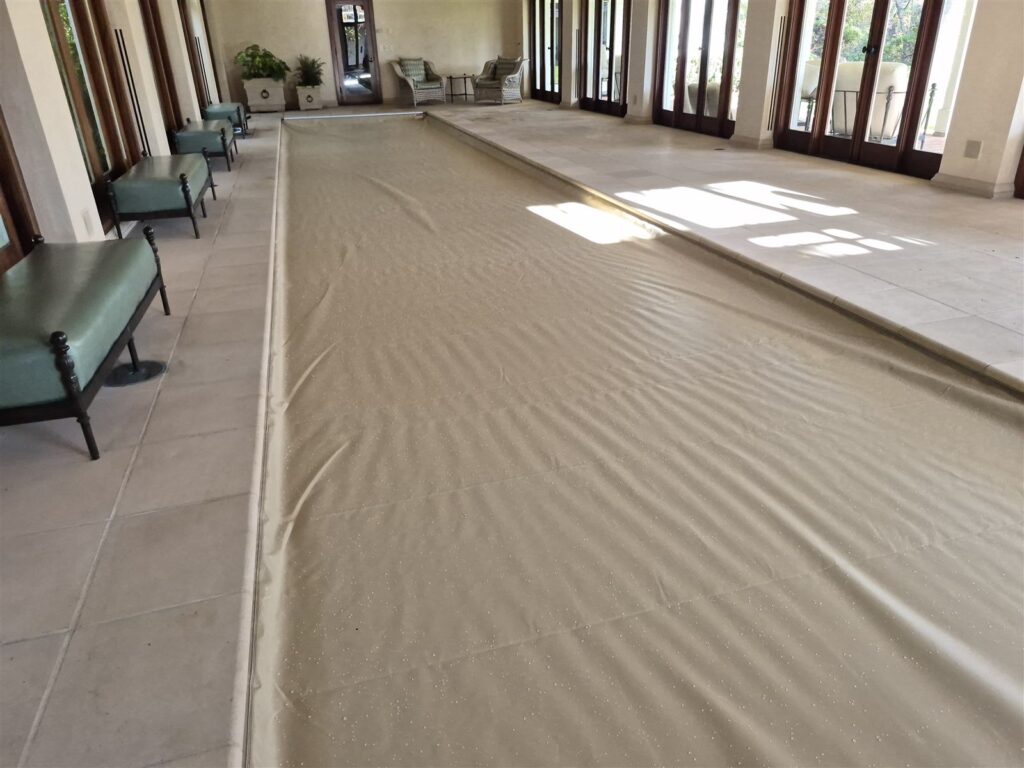
One of the most common questions homeowners have after seeing an automatic pool cover is:
“Why isn’t my pool cover tight?”
The answer is important: an automatic safety cover is supposed to have slack. The bagginess is intentional and necessary for the cover to function properly as a safety cover.
An automatic pool cover should not be stretched tight like a drum. When a cover is tight like a drum, it ceases to function as a safety cover as designed because it cannot properly use the pool water underneath it for support.
A Safety Cover Needs Three Things: Vinyl, Water Support and Secure Tracks
For an automatic pool cover to perform properly as a safety cover, three components work together:
The vinyl cover fabric
The pool water underneath the cover to provide support
The tracks that secure the sides of the cover
The water underneath the cover is an important part of the safety system.
Water has to be able to support the cover; otherwise, the cover can fail to perform as a safety cover.
If the pool water is too low, the cover may have to support excessive weight without adequate support from the water underneath. This can cause the cover to sag excessively and can compromise its ability to perform as intended.
Why the “Bagginess” Is Necessary
What may look like sagging or excessive looseness to a homeowner is often the proper amount of slack intentionally built into an automatic safety cover.
If a person steps or falls onto the cover, that slack allows the cover and the person to lower into the pool water. The water underneath then helps support the person’s weight while the sides of the cover remain secured in the tracks.
If the cover is stretched tight like a drum, it ceases to function as a safety cover as designed because the cover cannot lower sufficiently into the water and transfer the load to the supporting water beneath it.
Therefore, trying to eliminate all of the wrinkles, looseness or bagginess from an automatic safety cover is not the goal.
A properly installed automatic safety cover is supposed to have slack.
Automatic Pool Cover Fabric Shrinks Over Time
There is another important reason a new automatic pool cover should not be installed too tightly: the vinyl fabric can shrink over time—often by 1 inch or more.
The cover needs to be manufactured and installed with enough material to accommodate this expected shrinkage as the vinyl ages and is exposed to normal environmental conditions.
A cover that is made or installed too tightly when new can become even tighter as the fabric shrinks.
This can place unnecessary stress on the:
Cover fabric and webbing
Tracks
Ropes or cables
Pulleys
Leading edge
Motor and operating mechanism
More importantly, a cover that becomes tight like a drum may no longer have the necessary slack to lower into the pool water and use the water for support as a safety cover is designed to do.
This is another reason a homeowner should not judge the quality of an automatic pool cover installation by how flat or tight the cover looks when it is new.
The proper amount of slack must account for safety, normal operation and the fact that the vinyl can shrink by 1 inch or more during its life.
Don’t Try to Tighten a Properly Installed Cover
Homeowners sometimes assume that a loose-looking cover needs to be tightened. That can be a mistake.
Automatic cover fabric requires the correct amount of slack for safety, operation, normal material movement and future shrinkage.
A cover should never be tightened simply to make it look flat or taut.
A cover that looks tighter is not necessarily safer. In fact, making an automatic safety cover tight like a drum can prevent it from functioning as a safety cover as designed.
Maintain the Correct Pool Water Level
Proper slack and proper water level work together.
The pool water underneath the automatic cover supports the fabric and the weight placed on it. If the water level becomes too low, the cover has farther to travel before reaching the water and may be subjected to excessive loads.
Maintaining the manufacturer’s recommended water level is therefore important for both normal operation and safety performance.
Remove Rainwater and Sprinkler Overspray
Although slack is necessary, large amounts of water sitting on top of the cover are different.
Use the cover pump to remove accumulated rainwater or sprinkler overspray.
Do not operate the cover while it is carrying a significant amount of water. The additional weight can place unnecessary stress on the fabric, ropes, tracks, motor and other components.
Keep Debris and Toys Off the Cover
Leaves, branches and other debris can add weight and can eventually work their way toward the cover box.
Pool toys, balls and floats present an additional risk because they can become trapped as the cover retracts.
If a ball or toy is pulled into the cover housing and rolled up with the vinyl, it can create a concentrated pressure point between layers of fabric. This can cause scraping, stretching, punctures, tears or premature wear.
Larger objects can also interfere with the cover mechanism or cause the fabric to roll unevenly.
Always remove toys, balls, floats and other objects from the pool and cover area before operating an automatic pool cover.
When Should You Be Concerned?
Normal slack should not be confused with a cover that has suddenly changed.
Contact a pool cover professional if:
The cover suddenly becomes significantly looser than it was previously
One side has considerably more slack than the other
The cover begins pulling unevenly
The fabric comes out of the track
The pool water is at the correct level but the cover behaves differently
The cover develops unusual wrinkles or folds
The cover begins making unusual noises during operation
The important distinction is this:
Proper slack is necessary. Automatic cover fabric can shrink by 1 inch or more over time, so the cover needs enough material from the beginning to accommodate that shrinkage while continuing to operate and perform as designed.
Talk to a Pacific Pool Covers technician
Factory-trained, licensed, and never subcontracted. Call or text for an estimate.
It is not supposed to be. An automatic safety cover is built with slack so that, if someone steps or falls onto it, the cover lowers into the pool water and the water helps support the weight while the sides stay secured in the tracks.
Yes. The water underneath supports the cover. If the water level is too low, the cover has farther to travel before reaching the water and may carry excessive loads. Keep the manufacturer’s recommended water level.
Call if the cover suddenly becomes much looser, one side has considerably more slack than the other, it pulls unevenly, the fabric comes out of the track, it behaves differently at the correct water level, it develops unusual wrinkles or folds, or it makes unusual noises.