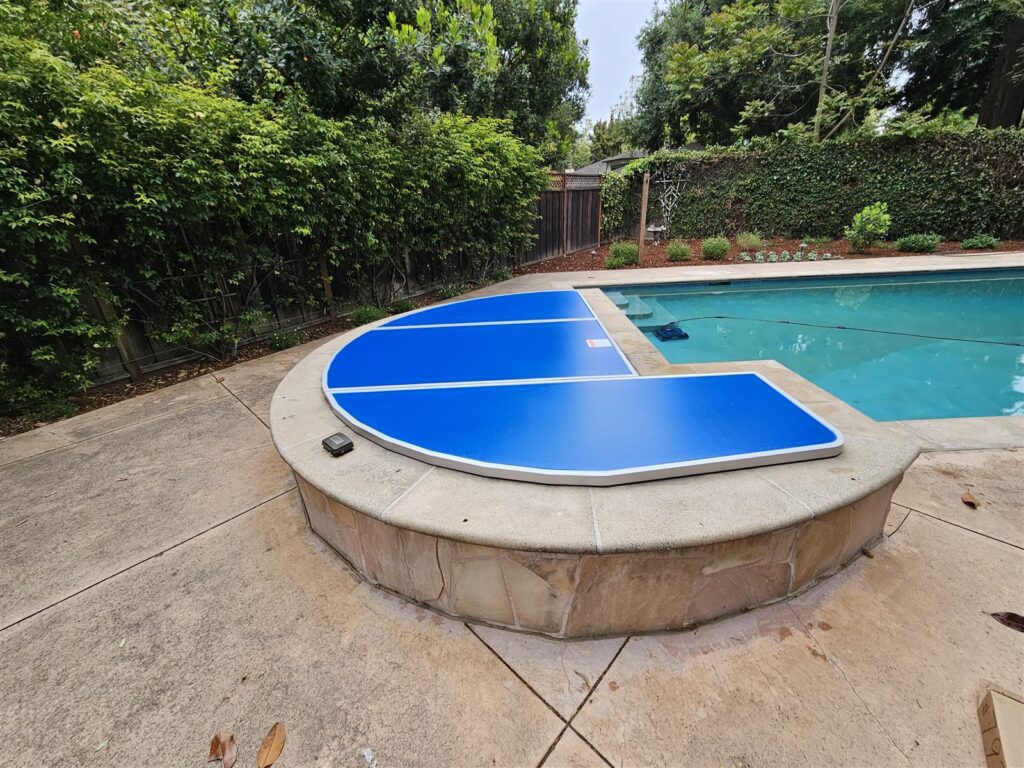
Quick SummaryThree common categories of inground pool covers are automatic, manual, and snap-down safety covers. Automatic models use a motor and track to open and close the cover with a switch or remote, while manual covers must be moved by hand. Snap-down safety covers stretch across the pool and attach to anchors around the surrounding deck. Automatic systems are available in Under Track, In-Wall, and Top Track configurations, with each design offering different installation requirements and visual finishes. Your pool’s shape, construction stage, budget, and preferred level of convenience can all influence which option makes the most sense.
When comparing types of pool covers for inground pools, it helps to look beyond the initial purchase price. The way a cover operates can have a major effect on how practical it is for everyday use. Some homeowners prefer the simplicity of pressing a button to cover the pool, while others are willing to handle the cover manually to keep the initial investment lower.
Below, we’ll go through the three main categories, including the track options within automatic systems, so you can see which setup fits your pool and your budget.
Automatic Pool Covers
Automatic pool covers use a motorized mechanism to move the cover across the pool along a track. Depending on the system, homeowners can operate the cover with a switch or remote, eliminating the need to physically pull, fold, or drag the fabric into place.
Although automatic systems generally require a larger initial investment than manual or snap-down covers, their simple operation makes them practical for frequent use. Most installations fall into one of three track configurations: Under Track, In-Wall, or Top Track.
Under Track
Under-track systems position the cover track beneath the pool coping, leaving it largely concealed when the cover is retracted. This creates a streamlined appearance around the pool and keeps the track away from the main walking surface.
The configuration is particularly well suited to rectangular pools where the system can be incorporated into the design during construction or a major renovation. Since the track is installed below the deck line, it also remains protected from regular foot traffic and does not occupy space directly on the deck.
In-Wall
An in-wall system incorporates the automatic cover track into the pool wall or coping itself. Rather than installing the track as a separate visible component, the system becomes part of the pool’s construction for a more integrated appearance.
This approach is generally easiest to plan during new pool construction or a substantial renovation. Adding an in-wall system to an existing pool can involve considerably more structural work. This makes it less straightforward as a retrofit than a top-track installation.
Top Track
Top-track systems place the cover track directly on the pool deck rather than beneath the coping or inside the pool structure. Because the installation is more accessible, this configuration can be a practical choice for existing pools and typically costs less than more integrated track options.
Top tracks can also accommodate freeform and other irregular pool shapes where an under-track or in-wall configuration may not be practical. The primary compromise is appearance, since the track remains visible on the deck. Low-profile track designs can help reduce its visual impact and minimize interference with the surrounding pool area.
Manual Pool Covers
Manual pool covers skip the motor and track system entirely. Instead, the cover gets pulled across the pool by hand and secured at the edges, then removed and stored the same way when the pool is in use. They come in several styles, including mesh, solid vinyl, and winter covers, each suited to different climates and usage patterns.
The upfront cost is significantly lower than an automatic system, which makes manual covers a common choice for pools used seasonally or for homeowners prioritizing budget over daily convenience. The downside is effort. Pulling a cover on and off by hand takes real time, and larger pools can require two people to manage the process safely.
Snap-Down Safety Covers
Snap-down covers, sometimes called mesh safety covers, attach to anchors installed around the pool deck perimeter. The cover stretches tightly across the water and clips into these anchor points, creating a barrier rated to hold significant weight when properly installed and secured.
These covers are popular for winterizing a pool or adding a safety layer without the cost of a full automatic system. Installation requires drilling anchor points into the deck, which is a one-time job, but daily use still means unclipping and rolling the cover back each time the pool gets used. That makes snap-down covers a better fit for seasonal use than for pools opened and closed multiple times a week.
Comparing the Three Categories
Each cover type solves a slightly different problem, and the right fit depends on how the pool gets used day to day.
Automatic covers cost the most but offer the easiest daily operation and the strongest energy and water savings over time
Manual covers cost the least upfront but require physical effort with every use
Snap-down covers sit in the middle, offering solid safety coverage at a lower cost than automatic systems, though they still require manual handling
Pool shape also plays a role. Rectangular pools have more track options available, while freeform and custom shapes often point toward top-track automatic systems or snap-down covers instead of under-track or in-wall setups.
Which Option Makes Sense for Your Pool
New construction projects have the most flexibility, since under-track and in-wall systems can be planned into the pool design from day one. Existing pools being retrofitted usually lean toward top-track automatic systems, manual covers, or snap-down anchors, since these options don’t require major structural changes.
Households that use the pool often and want a hands-off routine typically get the most value from an automatic system, while occasional or seasonal use makes a manual or snap-down cover a reasonable way to keep costs down.
Find the Right Fit with Pacific Pool Covers
Choosing between the different types of pool covers for inground pools gets easier once you know how your pool is built and how often it gets used. Pacific Pool Covers has installed and repaired automatic, manual, and snap-down covers across Northern California for over 40 years, and our factory-trained technicians can walk your property to recommend the track system or cover type that fits your pool’s shape and your household’s routine.
We work with every major brand and handle installation ourselves without outside subcontractors. Call or text Pacific Pool Covers today to talk through your options.
It’s possible in some cases, but under-track and in-wall systems are far easier to install during new construction. Most retrofits on existing pools use a top-track automatic system instead, since it doesn’t require major changes to the pool wall or coping.
When properly anchored and rated for safety, snap-down covers can hold significant weight and meet many local safety standards. The main difference is daily convenience, since automatic covers open and close at the push of a button while snap-down covers require manual removal each time.
Manual covers typically have the lowest upfront cost, followed by snap-down safety covers. Automatic covers cost more to install but offer the most convenience and the biggest long-term savings on water and energy use.
Talk to a Pacific Pool Covers technician
Factory-trained, licensed, and never subcontracted. Call or text for an estimate.