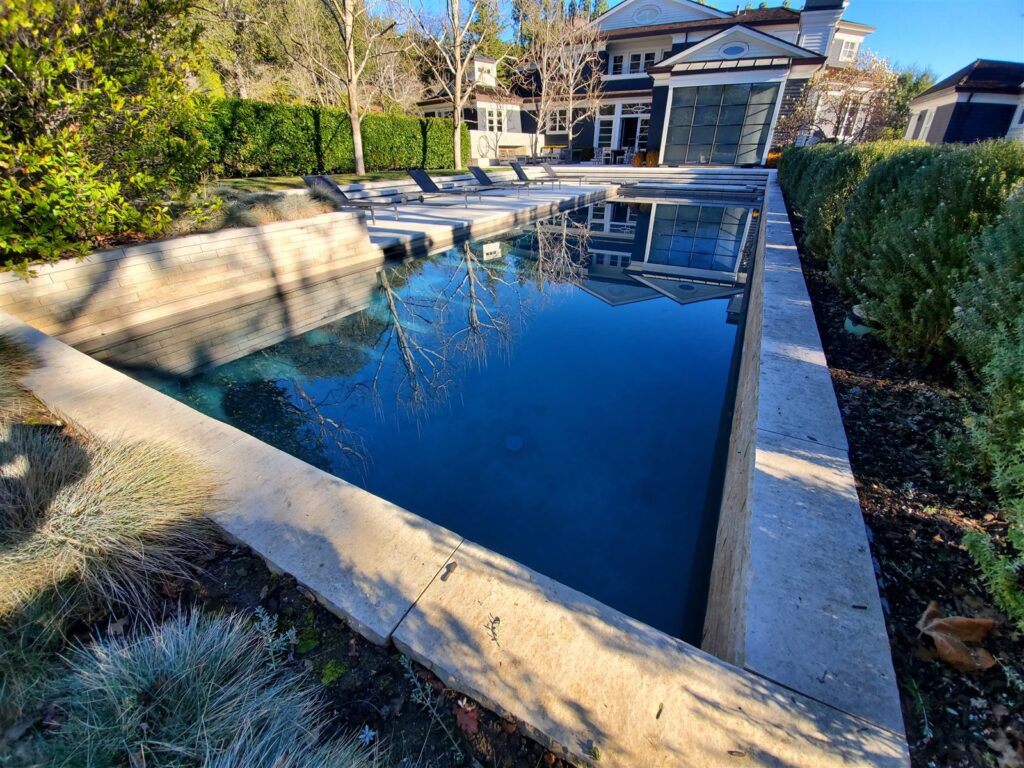
Homeowners frequently ask whether they should install an automatic safety cover, a pool fence or both.
The answer depends partly on local requirements, pool design and how the pool area is used. A pool owner should always comply with applicable building and safety requirements.
However, fences and automatic safety covers provide different benefits.
Pool Fence
A properly designed pool fence creates a physical barrier around the pool area.
The CDC recommends four-sided isolation fencing that completely separates a pool from the house and yard, with self-closing and self-latching gates. CDC reports that four-sided isolation fencing reduces a young child’s drowning risk by 83% compared with three-sided property-line fencing.
Automatic Safety Cover
A qualifying automatic safety cover creates a barrier directly over the water when the pool is closed.
ASTM F1346 establishes performance requirements for safety covers intended to reduce drowning risk by inhibiting access to the water by children under five when properly installed and used.
The U.S. Consumer Product Safety Commission also recognizes a power safety cover meeting the applicable ASTM standard as an important layer of pool protection in its residential pool barrier guidance.
All of the automatic pool covers we install meet applicable ASTM safety standards.
An Automatic Cover Offers Benefits a Fence Does Not
An automatic pool cover can also:
Reduce water evaporation
Reduce heat loss
Reduce pool heating costs
Help reduce chemical consumption
Keep leaves and debris out of the pool
Reduce cleaning
Make covering and uncovering the pool convenient
EPA reports that solid pool covers can reduce evaporation by more than 90% and can save approximately 50–70% of pool heating costs for heated pools.
Safety Should Use Layers of Protection
No pool cover, fence or other safety device eliminates the need for responsible adult supervision.
The CPSC recommends layers of protection around residential pools, including barriers and other safeguards, along with supervision and emergency preparedness.
It depends on local requirements, your pool design and how the pool area is used. Always comply with applicable building and safety requirements. Fences and automatic safety covers provide different benefits, and the CPSC recommends layers of protection around residential pools.
The CDC recommends four-sided isolation fencing that completely separates the pool from the house and yard, with self-closing and self-latching gates. It reports that this reduces a young child’s drowning risk by 83% compared with three-sided property-line fencing.
Yes. All of the automatic pool covers we install meet applicable ASTM safety standards. ASTM F1346 sets performance requirements for safety covers intended to reduce drowning risk by inhibiting access to the water by children under five when properly installed and used.
An automatic cover can reduce evaporation, heat loss, heating costs, chemical use and cleaning, and it keeps debris out of the pool. EPA reports that solid pool covers can reduce evaporation by more than 90% and save approximately 50 to 70% of pool heating costs for heated pools.