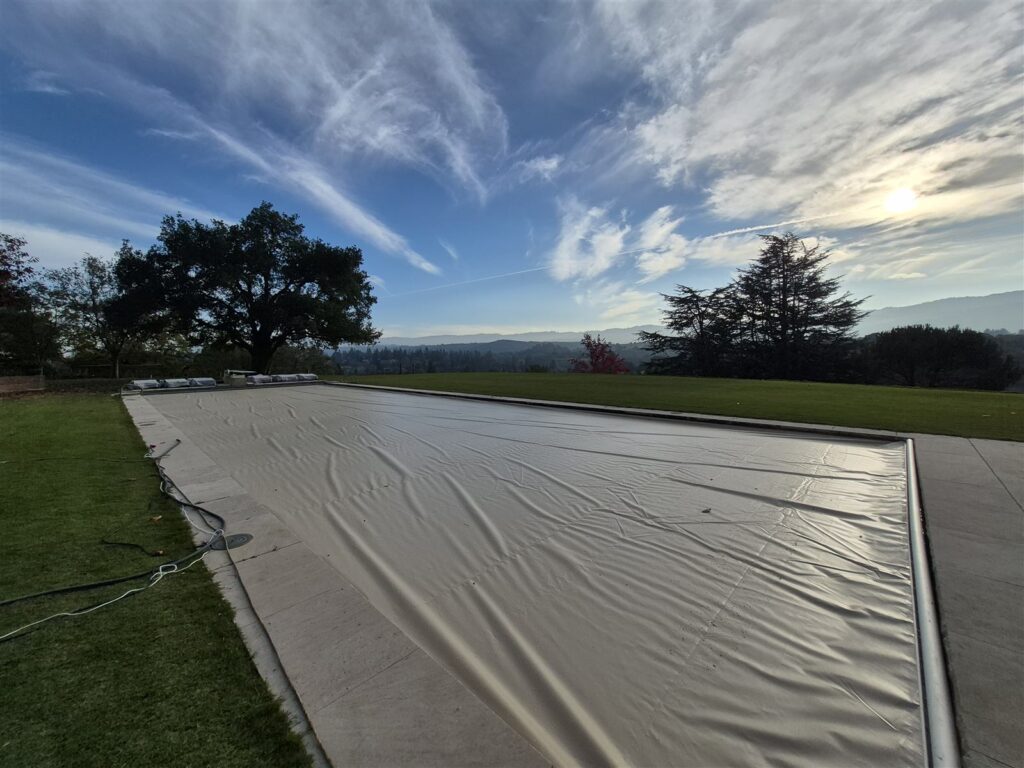
Rainwater collecting on top of an automatic pool cover, or sprinkler overspray, should be removed promptly and correctly. Allowing large amounts of water to remain on the cover can place unnecessary weight on the fabric, ropes, tracks and operating mechanism.
Use a Pool Cover Pump
The safest way to remove standing water from a solid automatic pool cover is with a cover pump designed for this purpose.
Place the pump on the cover where water naturally collects and position the discharge hose so the water drains safely away from the pool and cover vault.
Allow the pump to remove the water before attempting to open the cover.
Never attempt to retract an automatic pool cover while significant water is sitting on top of it. The additional weight can severely stress or overload the cover system. Remove the pump, hose and electrical cord before retracting the cover.
Keep Your Pool at the Correct Water Level
Your pool water provides important support underneath an automatic safety cover. Maintaining the proper water level is especially important during rainy weather.
Keep the water at the appropriate operating level for your pool and skimmer system. A pool with a water level that is too low may not adequately support the cover when rainwater accumulates on top.
Remove Leaves, Toys and Debris
Leaves, branches, balls, pool toys, floats and other debris should be removed from the cover and surrounding area before operating the cover.
Never allow toys, balls, floats or other objects to roll into the cover housing or become rolled up with the cover.
When an object becomes trapped between layers of vinyl as the cover rolls onto the reel, it can stretch, scrape, puncture or tear the fabric. It can also create an uneven roll and place additional stress on the ropes, tracks, pulleys, motor and other mechanical components.
Even lightweight objects such as balls can become a problem when they are pulled into the cover box. Keeping the cover and cover housing free of objects and debris is an important part of preventing avoidable damage.
Why Pool Covers Are Worth Maintaining
Keeping your cover in good operating condition does much more than keep leaves out of your pool.
According to the U.S. Environmental Protection Agency’s WaterSense program, properly used solid pool covers can reduce evaporation by more than 90%. EPA estimates that an uncovered 500-square-foot swimming pool can lose approximately 12,000 to 31,000 gallons of water every year through evaporation, depending on climate.
Use a cover pump designed for this purpose. Place it where water naturally collects, run the discharge hose so the water drains away from the pool and cover vault, and let the pump finish before you try to open the cover.
No. Never retract an automatic pool cover with a significant amount of water on top. The extra weight can severely stress or overload the cover system. Remove the pump, hose and electrical cord before retracting the cover.
Yes. The pool water supports an automatic safety cover from underneath. If the water level is too low, the cover may not be adequately supported when rainwater collects on top.
An object trapped between layers of vinyl can stretch, scrape, puncture or tear the fabric. It can also make the cover roll unevenly and add stress to the ropes, tracks, pulleys and motor. Remove toys, balls and floats before operating the cover.
Talk to a Pacific Pool Covers technician
Factory-trained, licensed, and never subcontracted. Call or text for an estimate.