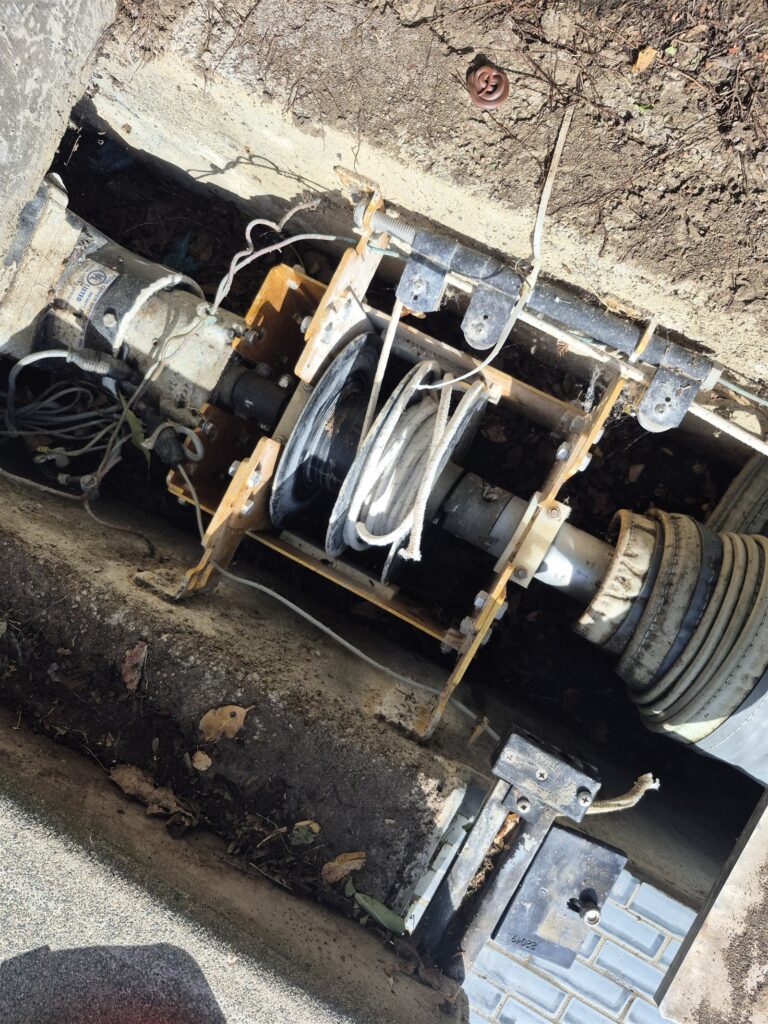
Automatic pool covers are mechanical systems with motors, ropes or cables, pulleys, tracks, switches and moving components. Like any mechanical system, parts eventually wear and require adjustment, maintenance or replacement.
Here are some of the most common problems we see.
Cover Won’t Open or Close
Possible causes include:
Electrical or power issue
Key switch problem
Motor or power-pack problem
Broken rope or cable
Mechanical obstruction
Cover out of alignment
Damaged pulley or component
Toys, balls or debris caught in the cover or mechanism
Do not repeatedly operate the switch if the cover is obviously stuck. Continuing to run a malfunctioning system can turn a relatively small repair into a larger one.
Cover Opens Unevenly
If one side moves faster than the other, stop operating the cover.
Possible causes include rope or cable problems, pulley issues, uneven tension, damaged components or something interfering with the track.
Cover Is Moving Very Slowly
Slow operation can indicate excessive load or resistance.
Possible causes include:
Debris
Toys or objects caught in the system
Low pool water
Water sitting on the cover
Mechanical wear
Track problems
Incorrect fabric sizing or tension
Motor or power-pack issues
Broken Rope or Cable
Ropes and cables are wear components.
When one fails, the system should be inspected to determine whether only the failed component should be replaced or whether additional worn components should be addressed at the same time.
Cover Fabric Is Torn
Some localized damage may be repairable with an appropriate patch. Larger tears, deteriorated fabric, damaged webbing or aging material may require replacement.
Toys, balls and other objects that become rolled up with the cover can also scrape, stretch, puncture or tear the vinyl.
A repairable hole does not necessarily mean the entire cover needs replacement—but the overall condition and age of the fabric should be evaluated.
Cover Appears Loose or Baggy
Some slack is required for an automatic safety cover. The goal is not to make the fabric tight like a drum.
The cover needs enough slack to lower into the pool water when weight is placed on it so the water underneath can provide support.
The vinyl can also shrink by 1 inch or more over time, which is another reason the cover needs the proper amount of material and slack when it is manufactured and installed.
If the amount of slack suddenly changes, one side becomes noticeably different from the other, or the cover begins operating differently, the system should be professionally inspected.
Cover Makes Unusual Noises
Grinding, squealing, popping or other new noises should not be ignored.
Stop operating the cover if something sounds significantly different from normal operation. Continued operation can cause additional damage.
Yearly Preventive Maintenance Can Help Prevent Larger Repairs
Automatic pool cover manufacturers recommend regular maintenance, generally at least once a year, to keep ahead of developing issues with the cover fabric, tracks and operating mechanism.
During preventive maintenance, the entire system should be inspected—not just the vinyl. Depending on the system and its condition, this can include checking the:
Cover fabric and webbing
Ropes or cables
Tracks
Pulleys and sliders
Leading edge
Motor and mechanism
Fasteners and moving components
Cover housing or vault
Overall opening and closing operation
The cover box should also be cleaned out. Leaves, dirt, debris and other material can accumulate around the mechanism and moving components where the homeowner may not be able to see it.
Cleaning the cover box and inspecting the system yearly can help uncover wear and developing problems before they result in a broken rope, damaged track, damaged mechanism or a cover that will no longer open or close.
Preventive maintenance cannot eliminate normal wear or guarantee that a component will not fail, but staying ahead of developing issues can often prevent a smaller maintenance item from becoming a much larger repair.
Pacific Pool Covers services and repairs automatic pool cover systems throughout Northern California and works with systems from the major automatic pool cover manufacturers.
Why Covering Your Pool Matters: Water, Energy, Money & Safety
A swimming pool cover provides benefits that go far beyond keeping leaves out of the water.
Save Thousands of Gallons of Water
According to the U.S. Environmental Protection Agency’s WaterSense program, an uncovered 500-square-foot pool can lose approximately 12,000–31,000 gallons of water every year from evaporation, depending on climate.
A solid pool cover can reduce evaporation by more than 90%—and up to approximately 95% when properly used.
That is particularly significant in California, where conserving water is an important consideration for homeowners.
Reduce Pool Heating Costs by 50–70%
EPA reports that using a solid cover on a heated swimming pool can save approximately 50–70% of pool heating costs.
A large portion of swimming-pool heat loss is associated with evaporation. Covering the water helps retain that heat instead of continually paying to replace it.
The exact electricity or fuel savings will depend on the pool’s heating system, pump equipment, climate, temperature settings and how consistently the cover is used. Therefore, Pacific Pool Covers does not promise a specific reduction in a homeowner’s electric bill.
Help Protect Children
Drowning can happen quickly and silently. The CDC reports that drowning is the leading cause of death for U.S. children ages 1–4, and most drowning deaths in this age group occur in swimming pools.
A properly installed and maintained safety cover meeting applicable safety standards can provide an important additional barrier between a child and the water.
ASTM F1346 establishes performance requirements for safety covers intended to reduce drowning risk by inhibiting access to the water by young children.
Help Protect Pets and Wildlife
An uncovered swimming pool can also be a hazard for pets and wildlife that accidentally enter the water and cannot escape.
EPA specifically notes that pool covers can provide a measure of safety to help prevent animals as well as children from drowning.
No cover can guarantee that a drowning will never occur, and a pool cover should never replace responsible supervision or other required safety measures. However, keeping a properly functioning safety cover closed whenever the pool is not in use adds an important layer of protection.
One Cover—Multiple Benefits
A properly selected and maintained pool cover can help:
Conserve water. Reduce evaporation. Retain heat. Lower pool-heating costs. Reduce chemical use. Keep debris out. Reduce cleaning. Protect the pool. And, with a qualifying safety cover, add an important layer of protection for children, pets and wildlife.
For more than 40 years, Pacific Pool Covers, Inc. has installed, serviced and repaired automatic swimming pool covers throughout Northern California.
Possible causes include an electrical or power issue, a key switch problem, a motor or power-pack problem, a broken rope or cable, a mechanical obstruction, a cover out of alignment, a damaged pulley, or toys or debris caught in the mechanism. Do not keep operating the switch if the cover is obviously stuck.
If one side moves faster than the other, stop operating the cover. Causes include rope or cable problems, pulley issues, uneven tension, damaged components or something interfering with the track.
Some localized damage can be repaired with a patch. Larger tears, deteriorated fabric or damaged webbing may require replacement, so the overall condition and age of the fabric should be evaluated.
Manufacturers recommend regular maintenance, generally at least once a year, covering the fabric, ropes or cables, tracks, pulleys, motor and the cover box. It cannot eliminate normal wear, but it can help catch problems before they become larger repairs.
Usually not. Some slack is required for an automatic safety cover. Have it inspected if the slack suddenly changes, one side differs noticeably from the other, or the cover starts operating differently.
Talk to a Pacific Pool Covers technician
Factory-trained, licensed, and never subcontracted. Call or text for an estimate.